
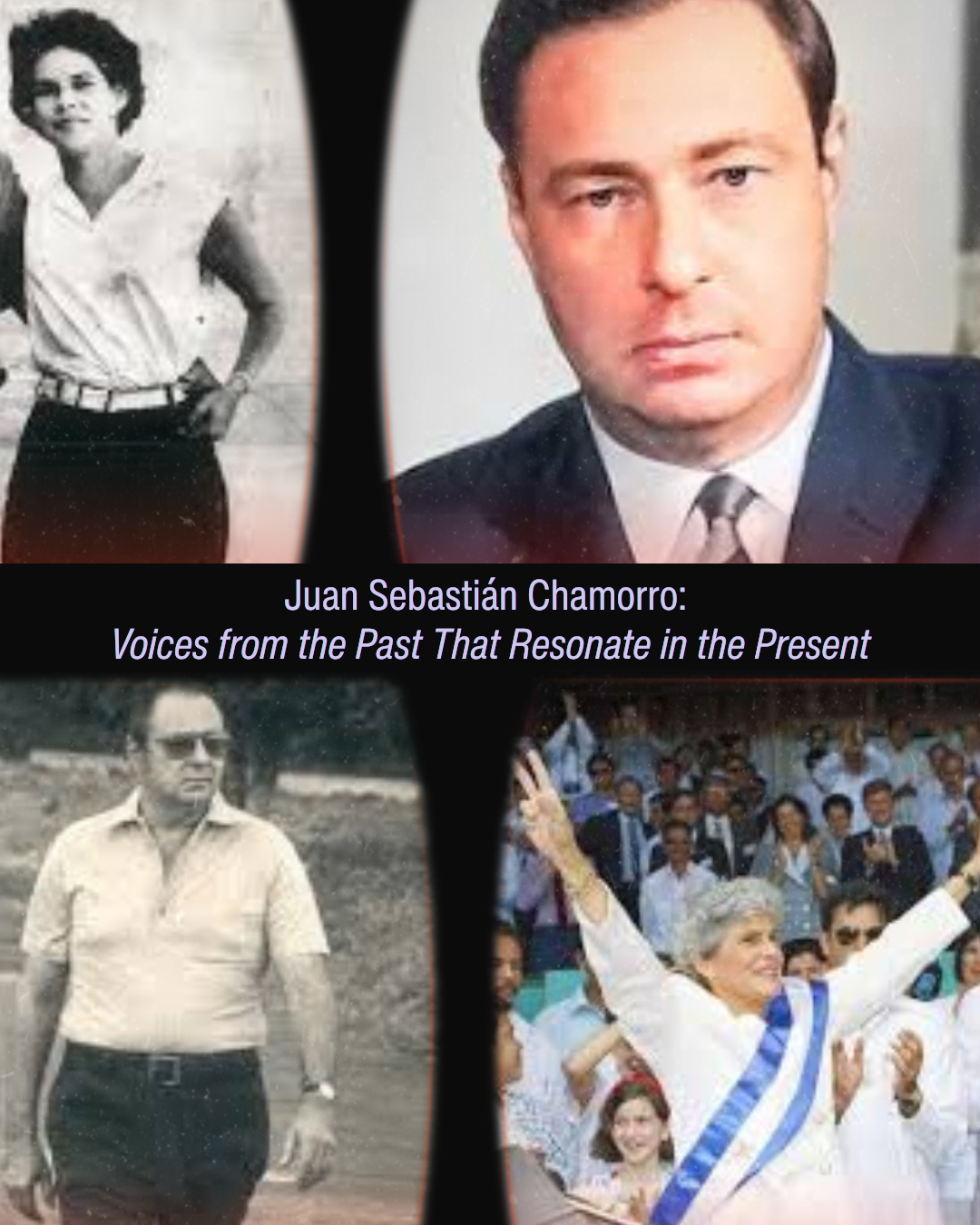
The talk centers on the Chamorro Barrios Family Papers housed at the Doris Stone Latin American Library and Research Center.
Through personal letters, newspaper editorials, prison writings, and rare archival documents, Professor Chamorro will discuss the struggles and political engagement of multiple generations of his family, whose lives became inseparable from Nicaragua’s most defining historical moments.
Among them are his grandfather Pedro Joaquín Chamorro Zelaya, founder in the 1930s of Nicaragua leading newspaper, La Prensa; his uncle, Pedro Joaquín Chamorro Cardenal, dissenting journalist and director of the La Prensa, whose assassination in 1978 became the catalyst in the overthrow of the Somoza regime; and his aunt, Violeta Barrios de Chamorro, who served as President of Nicaragua (1990–1996).
The talk invites the audience to witness how private correspondence can become public history, and how the moral choices of one generation echo in the next. By weaving together intimate testimony and national events, through successive episodes of forced exile, imprisonment, censorship, sacrifice and unwavering conviction, Chamorro explores themes of courage, democratic resilience, torture, death, hope and despair, as well as the enduring cost of dissent.
On view will be selected physical documents (letters, photographs, official documents and much more) from the Chamorro Barrios Family Papers relating to the talk which will also touch on the role of institutions like Tulane in preserving Latin America’s documentary heritage.
Join us for a reflection on memory, legacy, democratic resilience, and the enduring struggle for freedom.
Juan Sebastián Chamorro is a Nicaraguan economist, presidential candidate (2021) and political prisoner (2021–2023) who is a Greenleaf Distinguished Scholar at the Stone Center for Latin American Studies (2025–2026). He currently teaches a course at Tulane on democratic erosion in Latin America.