
Program Overview
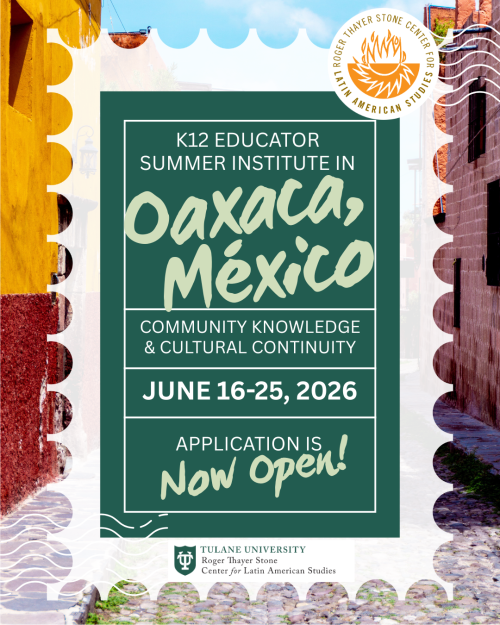
This institute will be held in Oaxaca, Mexico, a UNESCO World Heritage Site and one of Mexico's most culturally diverse states. Participants will engage with local artisans, educators, and community-based organizations while exploring sites of cultural, historical, and educational significance.
The program includes visits to Indigenous weaving communities, ceramic collectives, a Montessori school serving Zapotec students, traditional temazcal ceremonies, and immersive experiences with local food systems and sustainable practices. Participants will learn about mancomunidades (community governance systems), explore how Indigenous communities preserve cultural traditions through artisanry and celebration, and examine models of cultural resilience and innovation. Through these experiences, educators will develop culturally responsive teaching strategies that honor and amplify Indigenous voices and experiences.
Program Cost and Financial Support
Thanks to Title VI funding from the U.S. Department of Education, the cost of this 10-day program will not exceed $1,200 per participant. This subsidized cost includes accommodations, educational program expenses, in-country transportation, and two meals per day. Airfare is not included, and participants are responsible for arranging and purchasing their own flights.
A non-refundable deposit of $250 and complete registration will be required to secure your space upon acceptance.
Candidates who need additional financial support to cover program costs may apply for assistance on the application portal. Limited funds are available. Recipients of financial assistance will work with Tulane's Latin American Resource Center to develop curriculum materials based on their institute experience.
Who Should Apply
- All K-12 educators are eligible
- Teachers serving Mexican and Central American student populations are encouraged to apply
- Spanish language proficiency is not required and will not affect application review
Important Dates
Application deadline: February 27, 2026
Notification of Acceptance: rolling
Deposit and Registration Due: March 13, 2026
Learning Objectives
- By the end of the institute, participants will be able to:
- Develop culturally responsive teaching strategies using Zapotec and Mixtec perspectives and knowledge systems
- Apply Indigenous educational methodologies and community governance models to K-12 settings
- Create engaging lesson plans representing Oaxaca's Indigenous cultures, artistic traditions, and practices
- Connect traditional crafts, sustainable practices, and cultural preservation with contemporary community resilience
- Implement innovative teaching methods from Oaxacan educational settings
- Design learning experiences that foster cross-cultural understanding, cultural continuity, and global citizenship
- Examine gender diversity and third gender traditions within Indigenous Mesoamerican contexts
Questions?
If you have questions or would like more information, contact Cynthia Garza at Tulane’s Latin American Resource Center:
Phone: (504) 865 5164
Email: cgarza@tulane.edu
100 Jones Hall, Tulane Uptown Campus
